— Politicarp, refWrite Frontpage politics newspotter, analyst, columnist

Wikipedia (Jan18,2k13)
The crisis began in the early morning of 16 January 2013, when around 20 Islamist militants in three vehicles attacked a bus carrying workers to a natural gas plant near the town of In Aménas in far eastern Algeria, about 60 kilometres west of the border with Libya, before moving into the facility itself. The militants have reportedly rigged the plant with explosives and have threatened a "tragic end" should attempts be made to free the captives.
 A Briton and an Algerian security guard were, according to reports, killed during the initial phase of the attack. At least seven people were injured in the initial assault against the complex. Algerian nationals who worked at the plant were reportedly released.
Consequently, Algerian security forces surrounded the facility. At midday local time of 17 January, the Algerian army launched an attack to retake the facility and free the hostages. There are reports about a number of fatalities among both the hostages and the kidnappers.
Perpetrators
Perpetrators
 At the beginning of the crisis, Katibat Moulathamine (The Masked Brigade) was reported to be the perpetrator of the
 attack. However, later an al Qaeda affiliated group, the al-
Picture left: Dioncounda Traore, interim president of Mali
Mua'qi'oon Biddam (Those who Sign with Blood) Brigade, claimed responsibility for the attack. According to the Mauritanian news agency ANI and the Algerian Foreign Minister Daho Ould Kablia, the fighters are under the command of Mokhtar Belmokhtar, known as Khalid Abu al Abbas. In addition, they are not from Mali, Libya or "any other neighboring state". The one-eyed Mokhtar Belmokhtar, a veteran of Algeria's civil war and the Soviet invasion of Afghanistan and reportedly dubbed "The Uncatchable" by French intelligence, was a senior commander in al-Qaeda's local branch before deciding to form his own armed Islamist group late last year after an apparent fallout with other militant leaders. Despite the split, his fighters remain loyal to al-Qaeda and mentioned the fact in their communication with the media after the initial assault.
Demands
The militants have demanded an end to French military operations against Islamists in northern Mali in return for the safety of the hostages. A spokesman claiming to represent the "Masked Brigade" (or al-Mulathameen Brigade) said the hostage seizure was to respond to Algeria's opening of its airspace to French warplanes in their attack on Mali's militants. Other reports suggest the hostage-takers demand the release of about 100 Islamist prisoners held in Algeria.
USA Today (Jan18,2k13)
Reuters, citing an Algerian security source, is reporting that 30 hostages were killed in the assault, including several Westerners. The source also says 11 militants died, including the group's leader, Tahar Ben Cheneb, described as a "prominent commander in the region."
CNN (Jan18,2k13)

(CNN) -- Within the past few days, French combat forces have deployed to the West African state of Mali to halt the advance of militant Islamist fighters toward the capital and to help the Malian army begin to reclaim towns previously occupied by the militants. After intense airstrikes against rebel strongholds, French ground forces are moving north to try to dislodge the fighters.
Mali is one of the poorest countries in Africa, a vast and sparsely populated land that is largely desert. But events there are being watched with growing anxiety throughout West Africa, in European capitals and in Washington. Why?
Mali is hardly a regional powerhouse and is "marginal" to the world economy. It does not sit on lakes of oil; it is landlocked and desperately poor. But it is very big -- nearly twice the size of France -- with seven neighbors whose long, poorly guarded borders provide militants with supply (and escape) routes.
Many of these countries - from Algeria in the north to Ivory Coast in the south -- have themselves seen violence, extremism and instability and are ill-equipped to deal with the fallout from Mali imploding.
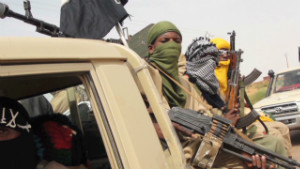
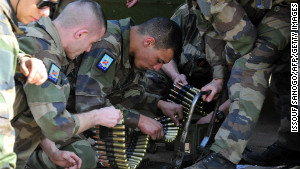
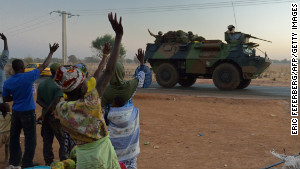

To the west, Mauritania has its own problems with Islamist militants associated with al Qaeda. Neighboring Niger to the east has, like Mali, seen frequent rebellions by ethnic Tuareg separatists.
To the north, the Algerian government still has its own al Qaeda problems. In the 1990s an Islamist insurgency and its repression claimed at least 100,000 lives. Militant cells remain active in the eastern mountains and in the desert bordering Mali, where troop convoys have been ambushed on several occasions.
Despite lingering animosity toward France because of colonial rule, Algeria has taken the unprecedented step in the past few days of allowing French military overflights to monitor the extremists' movements. That's because, according to analysts, it sees a growing danger of militant groups coalescing. To try to prevent militants infiltrating, Algeria has closed its border with Mali and deployed some 30,000 troops to border regions. Mauritania has also tried to protect its border.
Mali also sits astride some of the most lucrative smuggling routes from Africa to Europe, routes that militants have turned into a cash machine. At one point, drug traffickers from South America were flying aging jets packed with cocaine into a remote desert airstrip in Mali, for shipment to Europe.
So vast and inhospitable are the deserts of North Africa that groups with local knowledge (and a fleet of 4 x 4 vehicles) can make serious money from trafficking, whether in drugs, people or other contraband.


